Teaching Psalm 91 to Children: An Age-by-Age Practical Guide
One of the greatest gifts you can give a child is a foundation of Scripture so deeply embedded in their heart and mind that no circumstance of life can dislodge it. Psalm 91 is uniquely suited for this purpose. Its images are vivid and child-friendly — feathers and wings, angels with hands outstretched, lions and serpents being walked over. Its promises are comprehensive and personally applicable. This article is a practical guide for parents, grandparents, teachers, and children’s ministers who want to teach Psalm 91 effectively to children.
Why Children Need Psalm 91
Children fear. They fear the dark. They fear being alone. They fear monsters — real and imagined. They fear separation from parents, school difficulties, and bullying. Psalm 91 addresses every category of these fears with imagery that children can grasp and cling to. The image of God covering a child with his feathers and sheltering them under his wings is one that even very young children can understand. The promise of angels with strong hands, ready to catch you so you don’t even stub your foot, is extraordinarily meaningful to a child who has felt small and unprotected.
Age-by-Age Guide to Teaching Psalm 91
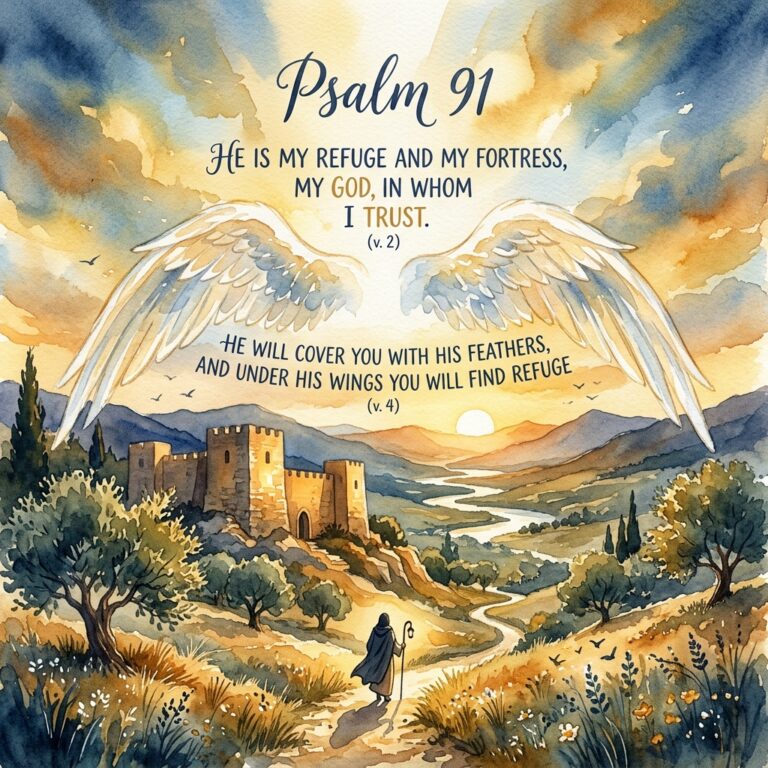
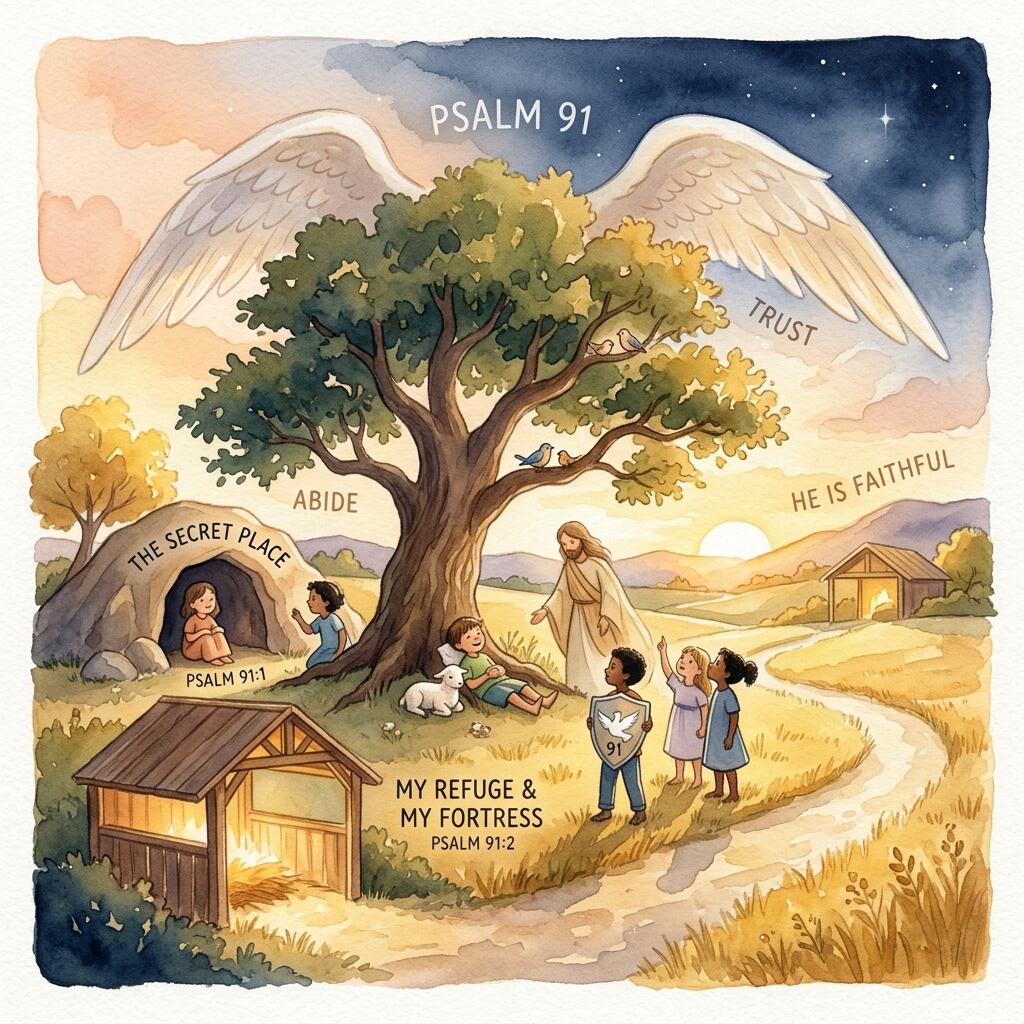
Ages 2–5: The Story and Image. Young children learn through story and image. At this age, the most powerful approach is simply reading Psalm 91:4 regularly: “He will cover you with his feathers. Under his wings you will take refuge.” (WEB). Pair this with a simple illustration of a large bird sheltering chicks. Tell them: “God is like this bird, but bigger and stronger than anything.”
Ages 6–9: The Story and the Promises. At this age, children can begin engaging with the specific promises of the psalm. Focus on verses that speak directly to their fears. Verse 5 — “You shall not be afraid of the terror by night” — is invaluable for children who struggle with nighttime fear. Teach them to speak this verse when they are afraid in the dark.
Ages 10–13: The Theology. Older children can explore the deeper structure of the psalm — the relationship between dwelling in God’s presence (verse 1) and experiencing God’s protection (verses 3–16). Ask them: “What does it mean to make God your refuge rather than something else?”
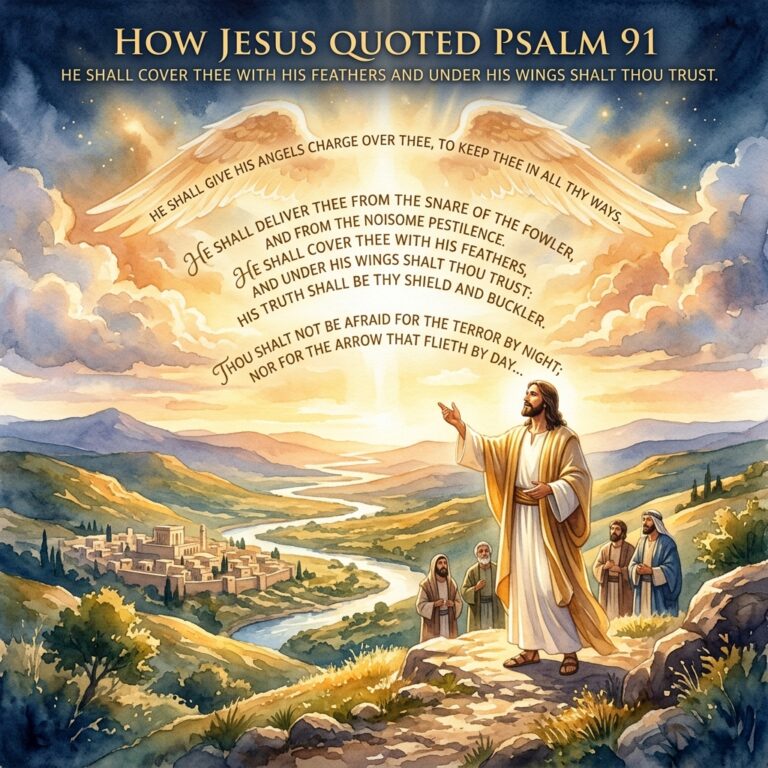
Ages 14+: The Full Encounter. Teenagers can engage with Psalm 91 as a full theological text — exploring its Hebrew background, its use in Jesus’ temptation (Matthew 4), and its application to the specific pressures of teenage life.
Creative Activities for Teaching Psalm 91
- Wings craft. Have young children make paper “wings” and write a verse from Psalm 91 on them.
- Shield art. Older children can design a “shield of faithfulness” based on Psalm 91:4.
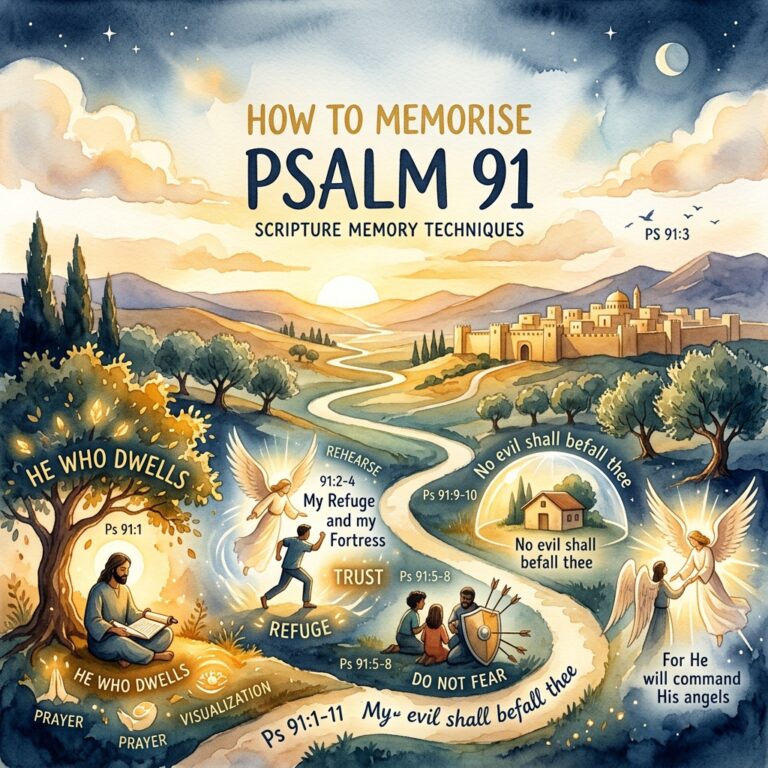
- Memorisation challenge. Create a family or classroom challenge to memorise verses 1–4 together.
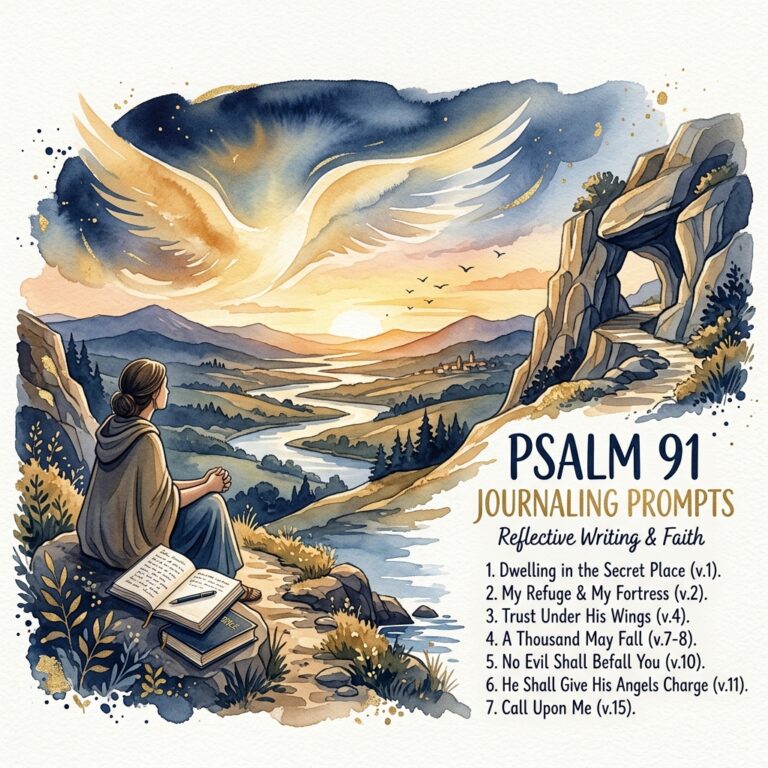
- Fear journalling. For older children and teens, have them write down their fears and then find a Psalm 91 verse that addresses each one.
- Before-school declaration. Establish a practice of speaking one verse from Psalm 91 over each child before they leave for school.
A Closing Prayer for Children and Those Who Teach Them
Lord, you welcome children — you said theirs is the kingdom of heaven. Give me wisdom to teach Psalm 91 in ways that land in young hearts and stay there. Let these children know from early on that they are covered, protected, and watched over by a God who loves them completely. May the words of this psalm become so familiar to them that they reach for it automatically when fear comes, all the days of their lives. Amen.