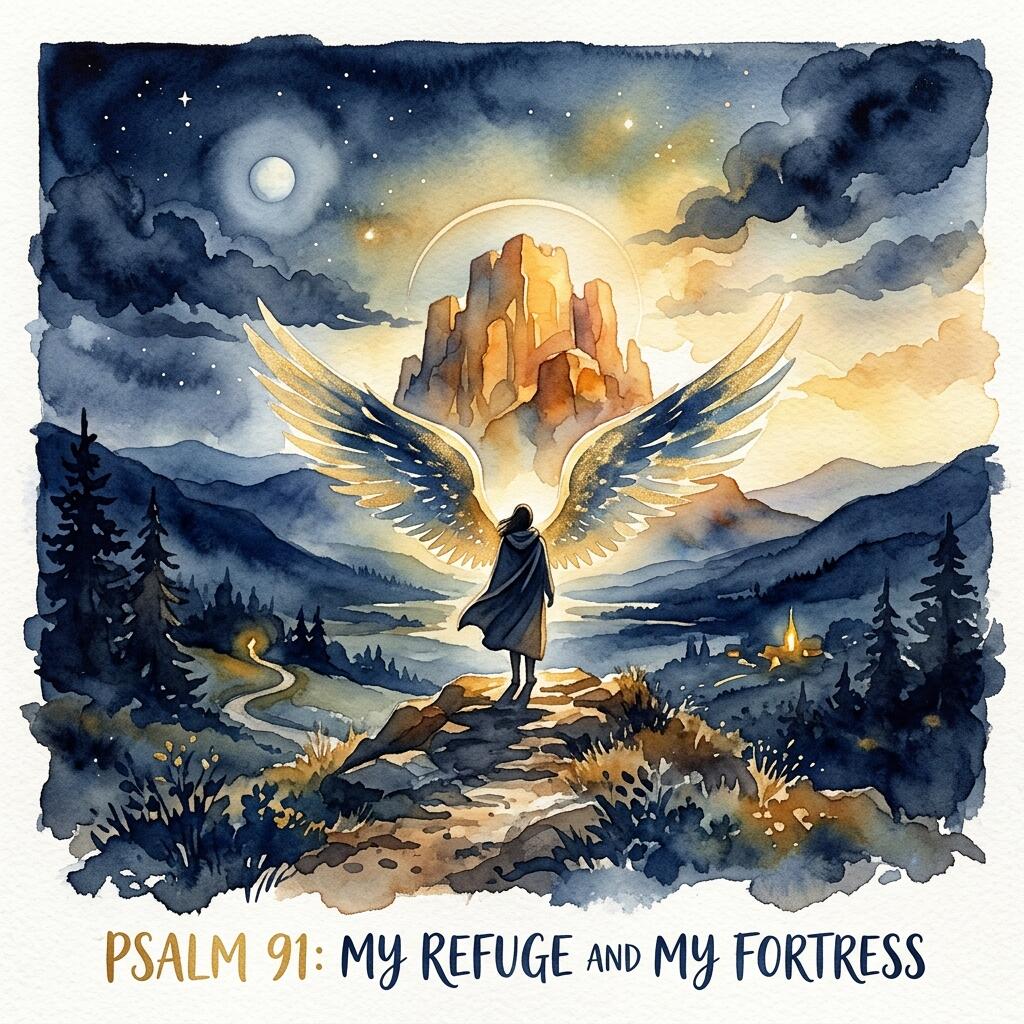
Psalm 91 Trusting God in Darkness: When Faith Requires Choosing Over Feeling
There are seasons of life that feel relentlessly dark — seasons in which the promises of Psalm 91 feel impossibly distant, in which the “secret place of the Most High” seems to have moved beyond finding. These are the seasons that test faith to its roots. They are also the seasons for which Psalm 91 was written. Not for the easy, sun-lit days when trust comes naturally — but for the nights, the storms, and the long tunnels when God’s presence must be chosen rather than felt. This article is for those in the dark.
When the Psalm Feels Like a Lie
Honesty requires acknowledging what many believers have experienced: reading Psalm 91 in a season of suffering and feeling not comforted but haunted. “He who dwells in the secret place of the Most High will rest” — but you are not resting. “No evil shall happen to you” — but evil has happened. How do you hold onto a psalm that appears to contradict your experience?
The first thing to note is that this tension is not unique to you — it is the honest cry of Scripture itself. Psalm 22 opens: “My God, my God, why have you forsaken me?” (Psalm 22:1, WEB) — the very cry that Jesus spoke from the cross. The psalms of lament outnumber the psalms of praise in the Psalter. The biblical tradition is not one that papers over dark seasons with easy promises; it is one that wrestles honestly with God in the darkness and gradually finds the light.
The Promise That Is Unconditional: His Presence in Trouble
There is one promise in Psalm 91 that does not require feeling good to access: verse 15’s declaration that God “will be with him in trouble.” He will be with you in trouble. Not “will remove you from trouble” but “will be with you in it.” This is the promise that survives all darkness, because it is not contingent on circumstances improving — it is contingent only on God being who he says he is.
Paul wrote from a Roman prison: “I have learned, in whatever state I am, to be content.” (Philippians 4:11, WEB). The contentment was learned — meaning it was not automatic. The presence of God in trouble is available to every believer in every situation, but it must be received by faith, often in the absence of any felt confirmation.
Practices for Trusting God When You Cannot Feel Him
Speak the truth against the feeling. When your feelings say God has abandoned you, speak verse 15 aloud: “You are with me in this trouble. You will answer when I call.” This is not denial of your pain — it is the refusal to let your feelings have the last word about reality.
Return to the condition, not the promise. If the promises feel inaccessible, return to the condition: “I am choosing to make you my refuge, even right now, even in this.” The posture of choosing God as your dwelling place is within your reach even when his presence is not felt.
Read the lament psalms alongside Psalm 91. Psalms 22, 42, 43, and 88 are your honest companions in the dark. They give you language for what you are experiencing and model the movement from honest despair to stubborn trust.
Receive the community. The dark is not a place to endure alone. Find a trusted community of believers — a church, a small group, a friend — who can hold the promises of Psalm 91 for you when you cannot hold them yourself.
A Closing Prayer from the Darkness
Lord, I am in the dark and I cannot find the way to your shelter on my own. But I choose to declare, even now: you are my refuge. I believe — help my unbelief. I know your words are true even when I cannot feel them. Be with me in this trouble. Answer me. Deliver me. And while I wait for deliverance, let me know, even here in the dark, that I am not alone. That your wings are still over me. That your angels are still on duty. That the story is not over. Amen.