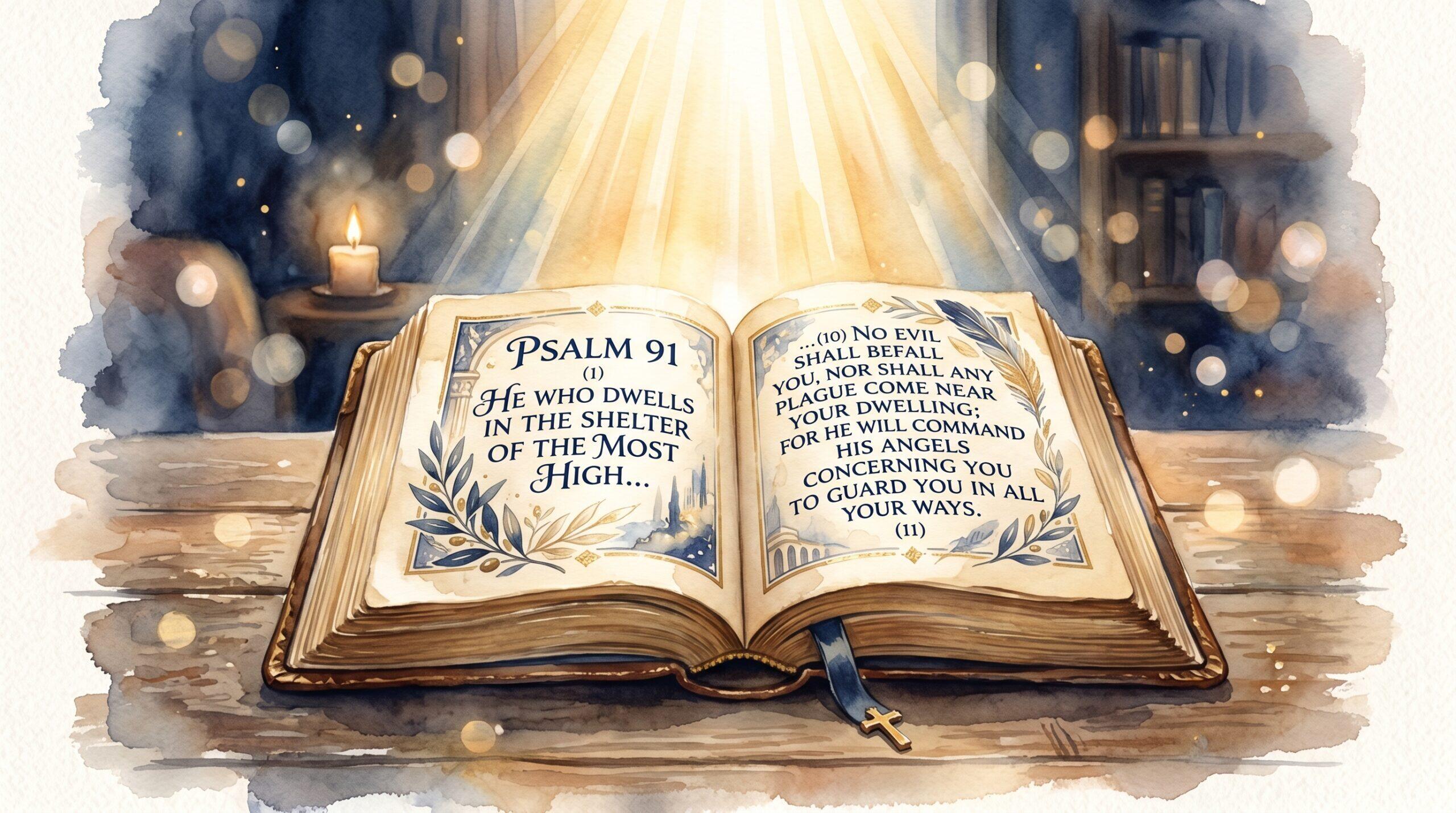
Psalm 91 Meaning Verse by Verse: A Complete Study Guide
Psalm 91 is a complete promise of divine protection for those who dwell in God’s presence—covering every conceivable danger from hidden traps to open warfare, from disease to demonic assault.. Known by many as “the Soldier’s Psalm” or “the Psalm of Protection,” its sixteen verses offer a profound theological portrait of what it means to live under the sovereign care of God. Yet many readers encounter this psalm without fully grasping what each verse actually means, where it comes from, or how it speaks to human life today. This verse-by-verse study aims to unpack each line slowly and carefully, allowing the full weight of its promises to settle into your understanding.
Verses 1–4: The Foundation of Shelter
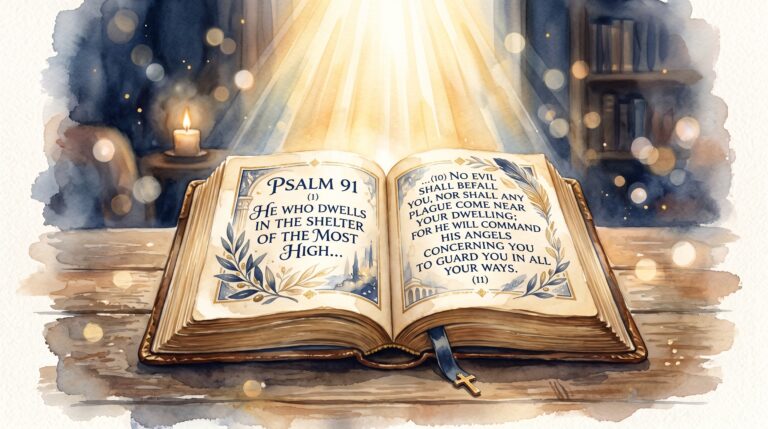
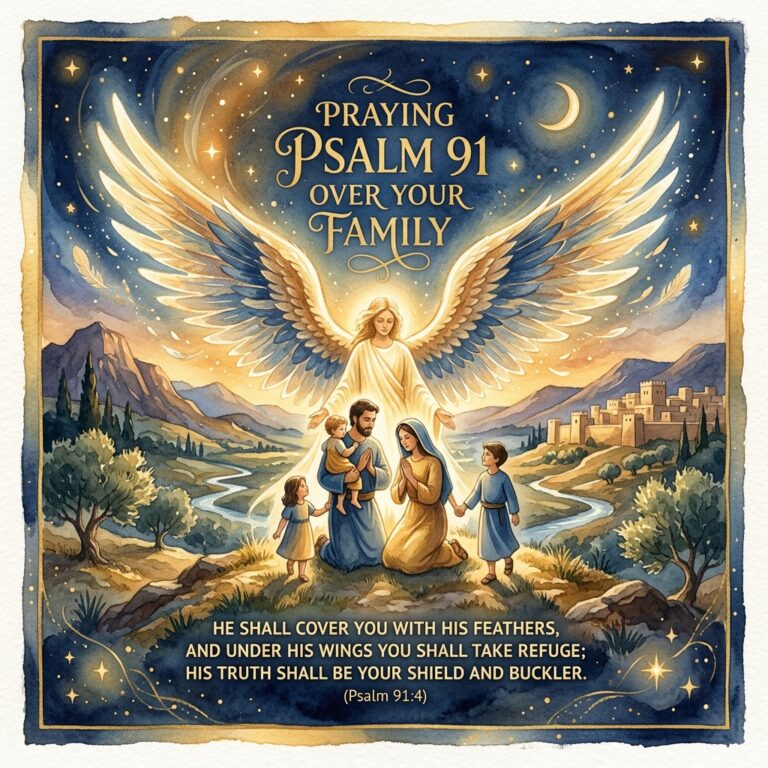
The psalm opens with what may be the single most important statement in the entire passage: “He who dwells in the secret place of the Most High will rest in the shadow of the Almighty.” (Psalm 91:1, WEB). For a focus on the ten key promises, see our promises-centered study. The word “dwells” here is not casual. In Hebrew, yashab carries the sense of settling in, taking up permanent residence. See our complete guide for broader context. The psalmist is not describing someone who visits God occasionally but someone who makes their home in God’s presence.. {‘rendered’: ‘Praying Psalm 91 Over Your Family. {‘rendered’: ‘5 Powerful Promises of Protection in Psalm 91’}. {‘rendered’: ‘The Ten Promises of Psalm 91 Explained
The phrase “Most High” (El Elyon) speaks of God’s transcendence — he is above every ruler, every power, every circumstance. Yet despite that transcendence, he is also the “Almighty” (Shaddai), the all-sufficient one whose resources never run dry. To rest in the shadow of the Almighty is to find yourself sheltered by someone far greater than any threat you face.
Verse 2 shifts to a personal declaration: “I will say of Yahweh, ‘He is my refuge and my fortress; my God, in whom I trust.’” (Psalm 91:2, WEB). This is faith spoken aloud. Refuge and fortress are military images — a place to flee when danger comes, and a fortified stronghold that withstands assault. Notice the intimate possessive: “my” God. This is not abstract theology but personal covenant relationship.
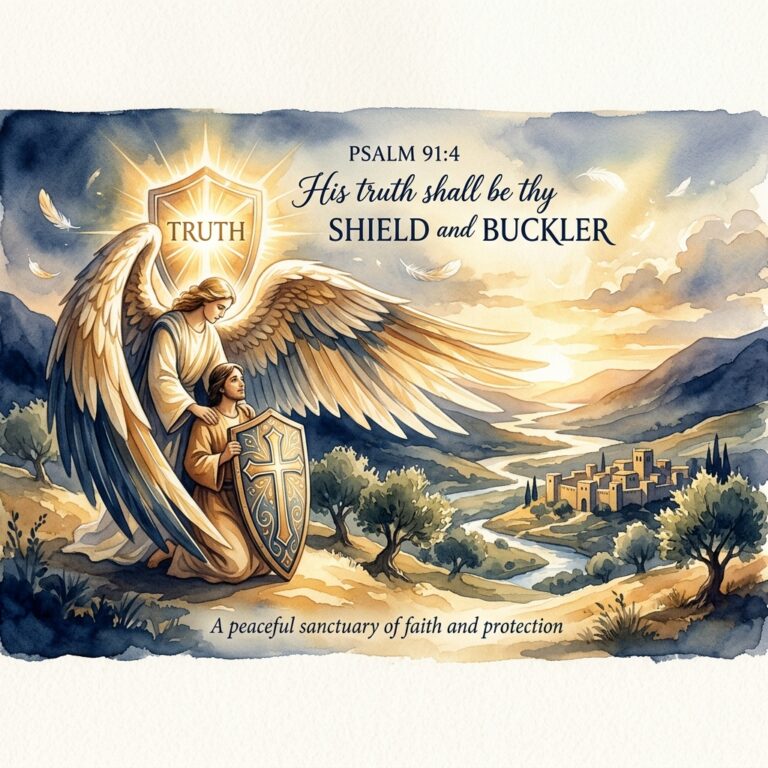
Verses 3 and 4 introduce metaphors of rescue and covering: “For he will deliver you from the snare of the fowler, and from the deadly pestilence. He will cover you with his feathers. Under his wings you will take refuge. His faithfulness is your shield and buckler.” (Psalm 91:3–4, WEB). The image of a bird sheltering its young under its wings is among the most tender in all of Scripture. God does not merely protect from a distance; he wraps himself around his children. “Snare of the fowler” pictures hidden traps set by enemies — God is alert to dangers we cannot see.
Verses 5–10: Freedom from Terror and Plague
One of the most striking sections of Psalm 91 deals with terror and disease: “You shall not be afraid of the terror by night, nor of the arrow that flies by day; nor of the pestilence that walks in darkness, nor of the destruction that wastes at noonday.” (Psalm 91:5–6, WEB). These four threats cover every hour of the day and every category of danger. Nighttime terror may be fear, nightmare, or sudden attack. The arrow by day may be open warfare. The pestilence in darkness is hidden disease. The noon-day destruction is overwhelming calamity that strikes even in broad daylight.
Verse 7 raises a statement that has caused much theological reflection: “A thousand may fall at your side, and ten thousand at your right hand; but it will not come near you.” (Psalm 91:7, WEB). What the psalm asserts is the ultimate trustworthiness of God’s protection — that those who are truly his will not ultimately be destroyed, and that God’s watch over them is never interrupted.
Verses 9–10 tie the protection directly to the condition stated in verse 1 — dwelling in God’s presence: “Because you have made Yahweh your refuge, and the Most High your dwelling place, no evil shall happen to you, neither shall any plague come near your dwelling.” (Psalm 91:9–10, WEB). The promises are inseparable from the relationship. It is not a magical formula but a covenant reality.
Verses 11–16: Angels, Victory, and the Voice of God
Perhaps the most memorable verses in the psalm are 11 and 12: “For he will put his angels in charge of you, to guard you in all your ways. They will bear you up in their hands, so that you won’t dash your foot against a stone.” (Psalm 91:11–12, WEB). The image is of angels commissioned as personal guardians, carrying the believer so carefully that even a stumble against a small stone is prevented. This is extravagant, detailed, personal care from heaven.
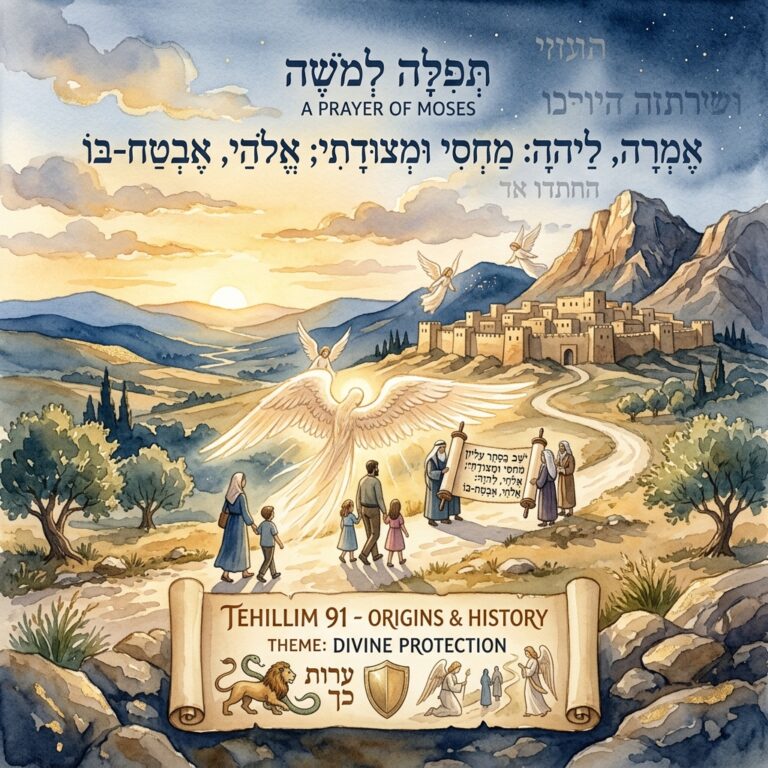
Verse 13 turns to the triumph of the one under God’s protection: “You will tread on the lion and cobra. You will trample the young lion and the serpent underfoot.” (Psalm 91:13, WEB). Lions and serpents represented the most feared natural enemies, but also, in biblical symbolism, the powers of evil and death. The protected one does not merely survive these threats — he walks over them.
The psalm closes with the voice of God himself in verses 14–16: “Because he has set his love on me, therefore I will deliver him. I will set him on high, because he has known my name. He will call on me, and I will answer him. I will be with him in trouble. I will deliver him, and honor him. I will satisfy him with long life, and show him my salvation.” (Psalm 91:14–16, WEB). Seven promises tumble out of God’s own mouth: deliverance, exaltation, answered prayer, divine presence in trouble, rescue, honour, and long life leading to salvation.
Practical Takeaways: How to Apply Psalm 91 Today
- Pray verse 2 aloud each morning. Declaring “You are my refuge and fortress” trains your mind to see God as primary reality before the day’s fears can crowd in.
- When fear strikes, return to verses 5–6. Name the specific fear and claim the specific promise. God is bigger than each category of danger.
- Meditate on the closing promises in verses 14–16. The key is intimacy, not performance — “because he has set his love on me.”
- Remember the psalm is communal as well as personal. The promises extend to families and communities who together dwell in God’s presence.
A Closing Prayer
Lord Most High, thank you for the gift of Psalm 91 — a lamp of truth in a world full of fear. Draw me deeper into your shelter today. Let your faithfulness be my shield. Command your angels concerning me and those I love. When I call, answer me; when I am in trouble, be with me. Satisfy me with the life that only you can give. I set my love on you, and I trust in your name. Amen.