What Is Psalm 91? A Complete Guide to the Psalm of Protection
What Is Psalm 91?
Psalm 91 is one of the most beloved and powerful passages in all of Scripture. Known as the “Psalm of Protection” or the “Soldier’s Psalm,” it has comforted countless believers through war, plague, persecution, and personal crisis for thousands of years. If you have ever wondered about the meaning of Psalm 91, its authorship, its historical context, and why it remains profoundly relevant today — this complete guide is for you.
Who Wrote Psalm 91?
The authorship of Psalm 91 has been debated among scholars for centuries. Jewish tradition attributes it to Moses, and for detailed verse-by-verse teaching, see our complete study guide. This attribution is supported by the fact that Psalm 90 — which immediately precedes it — is explicitly titled “A Prayer of Moses the man of God.” Many scholars believe Psalms 90–100 form a Mosaic collection.
If Moses wrote Psalm 91, it may have been composed during the 40 years Israel wandered in the wilderness — a time of real physical danger from enemies, snakes, disease, and the harsh desert environment. The vivid imagery of protection from pestilence, arrows, and wild animals fits perfectly with Israel’s wilderness experience.
The Full Text of Psalm 91 (WEB)
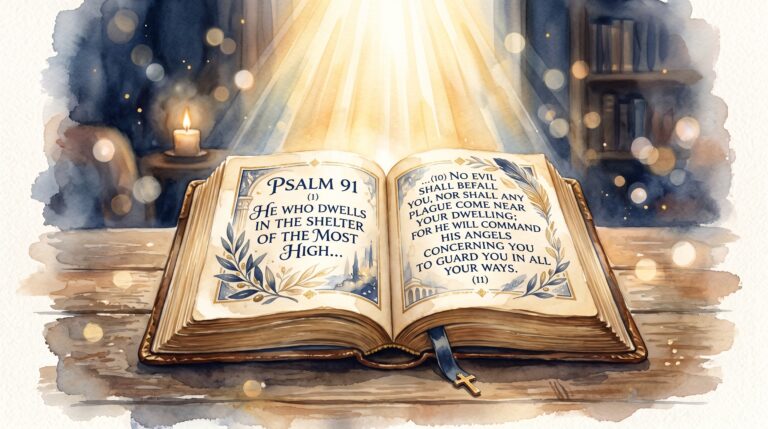
1 He who dwells in the shelter of the Most High will rest in the shadow of the Almighty.
2 I will say of the LORD, “My refuge and my fortress; my God, in whom I trust.”
3 For he will deliver you from the snare of the fowler and from the deadly pestilence.
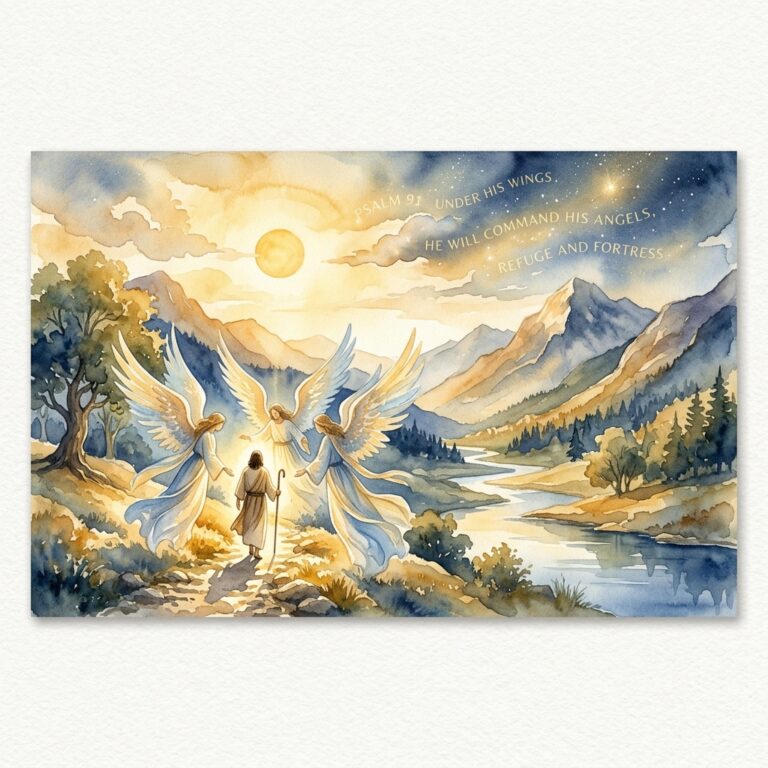
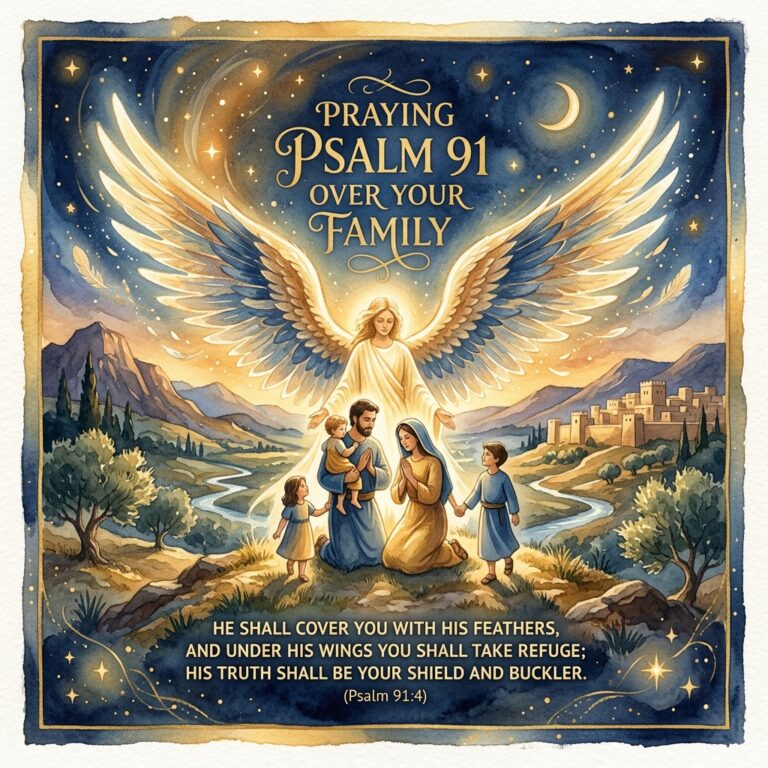
4 He will cover you with his feathers, and under his wings you will find refuge; his faithfulness is your shield and rampart.
5 You shall not be afraid of the terror by night, nor of the arrow that flies by day,
6 nor of the pestilence that walks in darkness, nor of the destruction that wastes at noonday.
7 A thousand may fall at your side, ten thousand at your right hand, but it will not come near you.
8 You will only look with your eyes and and see the recompense of the wicked.
9 Because you have made the LORD your refuge — and the Most High your dwelling place —
10 no evil shall happen to you, neither shall any plague come near your dwelling.
11 For he will put his angels in charge of you to guard you in all your ways.
12 They will bear you up in their hands, so that you won’t dash your foot against a stone.
13 You will tread on the lion and cobra; You will trample the young lion and the serpent underfoot.
14 “Because he has set his love on me, therefore I will deliver him; I will set him on high, because he has known my name.
15 He will call on me, I will answer him; I will be with him in trouble; I will deliver him, and honor him.
16 I will satisfy him with long life and show him my salvation.”
Psalm 91 Verse by Verse: The Meaning Explained
Before diving into the details, explore the ten promises of Psalm 91 for a comprehensive overview.
Verses 1–2: The Foundation — Dwelling with God
The psalm opens with a profound declaration: those who dwell in the shelter of the Most High will abide in the shadow of the Almighty. Notice the intentionality here — the word “dwell” implies a permanent, habitual residence, not a casual visit. The protection described in Psalm 91 is not automatic; it flows from a deliberate, intimate relationship with God.
The names used in these two verses are significant. “Most High” (El Elyon in Hebrew) speaks of God’s supreme authority over all creation. “Almighty” (El Shaddai) speaks of His all-sufficient power. “LORD” (YHWH) is the covenant name of God — personal and relational. “My God” (Elohim) is the general term for deity. By using all four names in just two verses, the psalmist is drawing on the full spectrum of who God is.
Verses 3–4: Deliverance from Snares and Disease
God promises to deliver His people from “the snare of the fowler” — a metaphor for cunning traps set by enemies — and from “deadly pestilence.” This speaks to both physical and spiritual dangers. The imagery of God covering His people with His “pinions” (feathers) and offering refuge under His wings draws on the tender imagery of a mother bird protecting her chicks. This is one of the most beautiful pictures of divine protection in all of Scripture.
Verses 5–8: Protection from Every Direction
These verses describe comprehensive protection — the “terror of the night” (dangers in darkness), the “arrow that flies by day” (open warfare), the “pestilence that stalks in darkness” (hidden disease), and “destruction that wastes at noonday” (midday calamities). Together, these cover every hour and every threat. Even when thousands fall around the believer, God’s promise is that His protection will be evident.
Verses 9–13: The Angelic Promise
One of the most stunning promises in Scripture appears here: “He will command his angels concerning you to guard you in all your ways.” This verse was even quoted by Satan when he tempted Jesus in the wilderness (Matthew 4:6) — a testament to how powerful and well-known this promise is. The protection extends to treading on lions and serpents — symbols of the most terrifying earthly and demonic dangers.
Verses 14–16: God Speaks Directly
The final verses of Psalm 91 are remarkable: God Himself speaks. The shift from third person to first person (“I will deliver him… I will answer him… I will be with him”) is deeply personal. God offers seven specific promises: deliverance, protection, answered prayer, His presence in trouble, rescue, honor, long life, and salvation. These are not vague blessings — they are specific, personal covenantal commitments.
Historical Uses of Psalm 91
Throughout history, Psalm 91 has been recited in times of great danger. Soldiers have carried it into battle. Survivors of plague, famine, and disaster have clung to its promises. During the Black Death in medieval Europe, Christians recited Psalm 91 as a declaration of faith. The psalm is also used in Jewish tradition as a Shabbat prayer and is sung at Jewish funeral services as a reminder of God’s eternal protection.
In World War I, there are accounts of British soldiers reciting Psalm 91 before going “over the top” into enemy trenches. The psalm became associated with miraculous survival and divine intervention on the battlefield.
Why Psalm 91 Matters Today
In an age of global pandemics, political unrest, personal anxiety, and spiritual warfare, Psalm 91 speaks with extraordinary power. Its promises are not outdated — they are eternal. The God who protected Moses in the wilderness, David on the battlefield, and the early church through persecution is the same God who watches over you today.
The key to accessing the promises of Psalm 91 is found in verse 1: dwell in the shelter of the Most High. This means maintaining an active, abiding, trusting relationship with God through prayer, Scripture, and obedience. As you do, you position yourself under the shadow of the Almighty — the safest place in the universe.
How to Apply Psalm 91 to Your Life
- Memorize it. Hiding God’s Word in your heart means it’s available in any moment of crisis.
- Pray it. Use the psalm as a framework for daily protection prayers over yourself and your family.
- Declare it. Speaking Scripture aloud is a powerful act of faith and spiritual warfare.
- Trust it. God’s promises are true whether you feel them or not. Stand on them.
Psalm 91 is not a magic formula or a guarantee of a pain-free life. It is a declaration of who God is and how He relates to those who love and trust Him. In the deepest darkness, it points to the unwavering light of God’s faithful presence. That is its enduring power — and why believers have treasured it for thousands of years.