Shield and Buckler: The Meaning of Psalm 91:4 for Life Today
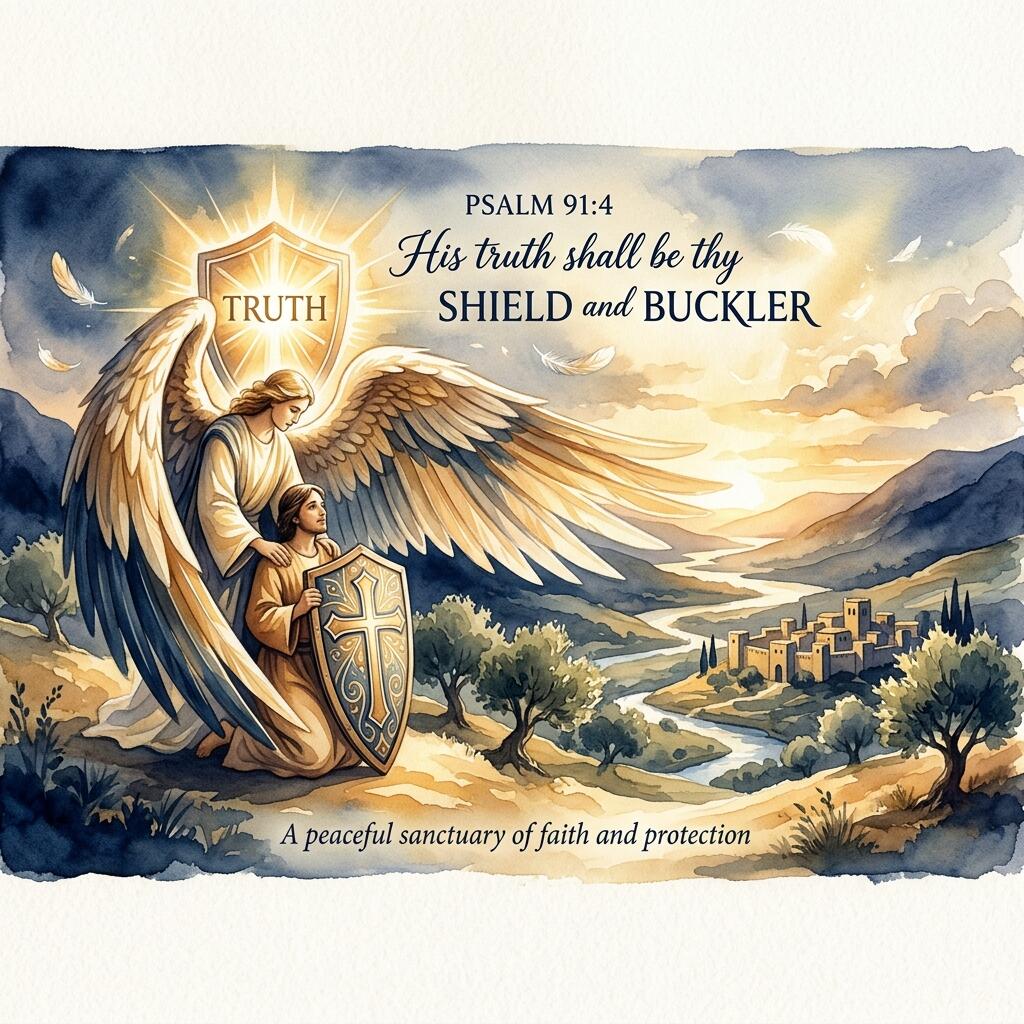
In Psalm 91:4, God’s faithfulness is both a large shield protecting against distant threats and a smaller buckler for close-quarters combat—comprehensive protection covering every angle of attack..” (Psalm 91:4, WEB). These two words — shield and buckler — are not merely poetic decoration. They carry specific meaning rooted in ancient warfare, and together they paint a remarkably complete picture of the protection that God’s faithfulness provides. Understanding what a shield and buckler actually were helps us grasp the full depth of what God is promising here.
To understand the complete psalm, read the full verse-by-verse study of Psalm 91.. {‘rendered’: ‘Psalm 91 Origins and History in Hebrew. {‘rendered’: ‘Psalm 91 Meaning Verse by Verse. {‘rendered’: ‘5 Powerful Promises of Protection in Psalm 91’}
What Were Shields and Bucklers in the Ancient World?
In the ancient Near East, shields came in two basic varieties. The large shield — called a tsinnah in Hebrew — was a full body shield. See our article on the meaning of “He will cover you with his feathers” for related protection imagery. sometimes as tall as a man, made of wood covered in leather or metal. A soldier could crouch behind it and be entirely protected from arrows, javelins, and sword strikes. This is the word translated as “shield” in the World English Bible’s rendering of Psalm 91:4.
The buckler (Hebrew sochera) was smaller — a round shield worn on the arm or held in the hand, used in close-quarters combat. Where the large shield protected against distant projectiles, the buckler was for face-to-face battle. Together, these two pieces of equipment covered every scenario: long-range assault and close-range combat, arrows from a distance and swords pressed against you.
By combining both images, the psalmist is declaring that God’s faithfulness covers you completely. Whether the threat comes from far away or close up, God’s faithfulness is adequate. No angle of attack is undefended. No season of danger finds you without protection.
Why Faithfulness Is the Shield
It is worth pausing to notice exactly what the psalmist says is the shield and buckler. Not God’s power — though that is immense. Not God’s love — though that is immeasurable. His faithfulness. The Hebrew emet means truth, reliability, steadfastness — the quality of being exactly who you say you are, of doing exactly what you promised to do.
This is deeply significant. Your ultimate protection is not God’s raw omnipotence but his covenant faithfulness — the binding commitment he has made to those who trust him. He has promised to be their refuge. He has promised to deliver them. He has given his word. And God’s word does not return empty (Isaiah 55:11).
In practical terms, this means that when you are under attack — whether from illness, financial ruin, relational breakdown, or spiritual assault — you can wield God’s promises like a shield. Not because they are magical words but because behind them stands the perfectly faithful character of God himself. To pray God’s promises back to him is to take up the shield of his faithfulness and hold it between you and the assault.
The Full Context: Wings and Shields Together
Verse 4 contains not only the shield and buckler image but also the tender image of wings: “He will cover you with his feathers. Under his wings you will take refuge.” (Psalm 91:4, WEB). God is simultaneously the protecting mother bird and the battle-hardened warrior. His gentleness does not compromise his strength, and his power does not cancel his tenderness.
This pairing speaks directly to those who need both comfort and protection. Sometimes what we need most is not just to be strong but to be held. The image of hiding under wings addresses the wounded heart; the shield and buckler address the fighting spirit. Psalm 91:4 offers both in the same breath.
Applying the Shield of Faithfulness Today
Stand on God’s track record. Faithfulness is demonstrated through history. The God who was faithful to Abraham, to Moses, to David, to the early church is the same God who covers you now.
Pray the promises, not just the problems. Many prayers are largely lists of problems handed to God. Psalm 91 teaches us to pray the promises — to remind ourselves and declare to the enemy what God has already committed to do.
In close combat, call his name. The close-range buckler is for when danger is face-to-face. Verse 15 tells us: “He will call on me, and I will answer him.” (Psalm 91:15, WEB). When danger is inches from your face, you have the right — and the invitation — to cry out.
A Closing Prayer
Faithful God, your track record is perfect. You have never broken a promise, never failed a covenant, never abandoned one who called upon you. Today I take up the shield of your faithfulness and hold it against everything that threatens me. Cover me with your feathers; surround me with your truth. When the arrows fly and when danger is close, let your faithfulness be the first thing I reach for. I trust in you. Amen.